For too long, women have been told to choose: be strong or be soft, be powerful or be gentle, be fierce or be feminine. This false dichotomy ignores the truth countless women live daily—we contain multitudes, embodying strength and softness simultaneously without contradiction. That cashmere sweater you wear to negotiate your worth isn’t weakness; it’s armor that happens to feel impossibly soft. The wool sweater providing comfort during difficult moments doesn’t diminish your resilience; it supports it. As we celebrate Women’s History Month each March, Sweater Wardrobe honors the revolutionary women who refused to choose between strength and softness, who understood that power wrapped in gentleness is still power, and who built movements while nurturing communities. Your knitted sweater choices reflect this same truth—you can demand equality while appreciating beauty, lead with authority while valuing comfort, be formidable while remaining kind. The women who came before us knew this secret: strength and softness aren’t opposites but complements, and the most revolutionary act is refusing to diminish either to satisfy others’ limited expectations.

Dismantling the False Binary
The Cultural Lie of Either/Or
Patriarchal structures have long benefited from forcing women into false choices: professional or maternal, ambitious or nurturing, intelligent or beautiful, strong or soft. These artificial binaries serve specific purpose—they limit women’s full humanity, forcing us into narrow roles while men claim full spectrum of human experience. When women must choose between strength and softness, we’re prevented from accessing our complete selves. We’re controllable, predictable, diminished.
But women throughout history have refused this trap. Ruth Bader Ginsburg was fierce legal warrior who loved opera and fine lace collars. Maya Angelou was powerful voice for justice who also wrote tenderly about love and beauty. Malala Yousafzai advocates fearlessly for girls’ education while embracing traditionally feminine colors and styles. These women understood that wearing soft pink sweater doesn’t negate your strength, and displaying strength doesn’t require abandoning softness. Both/and, not either/or.
This resistance matters now more than ever. As women claim power in spaces historically denied us, pressure increases to perform masculinity as proof of capability—reject “feminine” clothing, suppress emotions, harden ourselves. This requirement is trap. True liberation means claiming space to be fully ourselves: strong and soft, fierce and gentle, powerful and tender. Browse our strength-and-softness collection designed for women refusing to choose.
Reclaiming “Soft” as Revolutionary
The word “soft” has been weaponized against women—soft-hearted, soft-spoken, too soft to lead. But softness, properly understood, is profound strength. Softness is choosing gentleness from position of power, not weakness. Softness is maintaining humanity in dehumanizing systems. Softness is staying open when closing off would be easier. Your grey sweater in impossibly soft cashmere represents this revolutionary softness—it’s luxury, yes, but also choice to prioritize your sensory comfort despite world telling you comfort doesn’t matter.

Consider the textile arts traditionally associated with women—knitting, weaving, sewing. These “soft” crafts clothed armies, funded revolutions, and encoded secret messages during wars. Women knitted for resistance movements, wove fabrics essential to economies, sewed flags for new nations. The knitted sweater is descendant of this powerful tradition. When you wear quality knitwear, you’re connected to lineage of women whose “soft” labor was actually revolutionary work.
Strength That Doesn’t Require Hardness
We’ve been taught that strength means hardening ourselves—developing thick skin, never crying, never needing, never being vulnerable. This definition of strength is masculine construct serving patriarchy, not women. True strength includes resilience through difficulty, yes, but also courage to remain soft, capacity for tenderness despite pain, willingness to need and be needed. A brown sweater worn during your toughest negotiations doesn’t weaken your position—it signals you’re secure enough in your power to prioritize your comfort alongside your goals.
Women’s History: Lessons in Both/And Living
Suffragettes in White Lace
The suffragette movement understood symbolic power of clothing. Women marching for voting rights often wore white—symbol of purity, yes, but also strategic choice making them visible, unified, impossible to ignore. They paired their white with delicate lace, beautiful fabrics, and feminine styling. This wasn’t capitulation to patriarchal beauty standards; it was deliberate statement: “We demand equality without sacrificing our femininity. We claim power while celebrating beauty. We are both/and.”
These women faced physical violence, imprisonment, and force-feeding while wearing their finest clothes. Their softness of appearance didn’t diminish their fierce determination. If anything, the contrast amplified their message: underestimating women based on appearance is foolish. That pink sweater you love wearing? It’s descendant of this tradition—refusing to make yourself less feminine to be taken seriously.
Working Women and Quality Clothing
As women entered workplaces en masse during 20th century, they navigated complex clothing politics. Too feminine, they weren’t taken seriously. Too masculine, they were accused of abandoning womanhood. The solution many found was quality, well-made pieces in classic styles—a wool sweater in excellent fabric, a well-constructed cardigan, pieces signaling both competence and self-respect. This wasn’t compromise; it was sophistication. These women understood you could dress beautifully while demanding equal pay, could appreciate quality while fighting discrimination.

This legacy continues. The cashmere sweater women wear to board meetings, client presentations, or job interviews isn’t frivolous—it’s intentional choice honoring both professional capability and personal comfort. You can be exceptionally competent while wearing exceptionally soft clothing. The two are unrelated except in minds of those who need women diminished.
Mothers, Activists, Artists: The Full Spectrum
Women’s history celebrates the full range of women’s contributions—mothers who raised children while changing communities, activists who fought injustice while maintaining families, artists who created beauty while surviving difficulty. These women refused singular definition. They were many things simultaneously: fierce and nurturing, creative and practical, strong and soft. Your grey sweater wardrobe reflects this same multidimensionality—comfort pieces for home, polished options for professional settings, beautiful items for personal joy. You’re not one thing; why should your wardrobe suggest otherwise?
Style as Statement: Dressing Your Full Self
The Power Cardigan
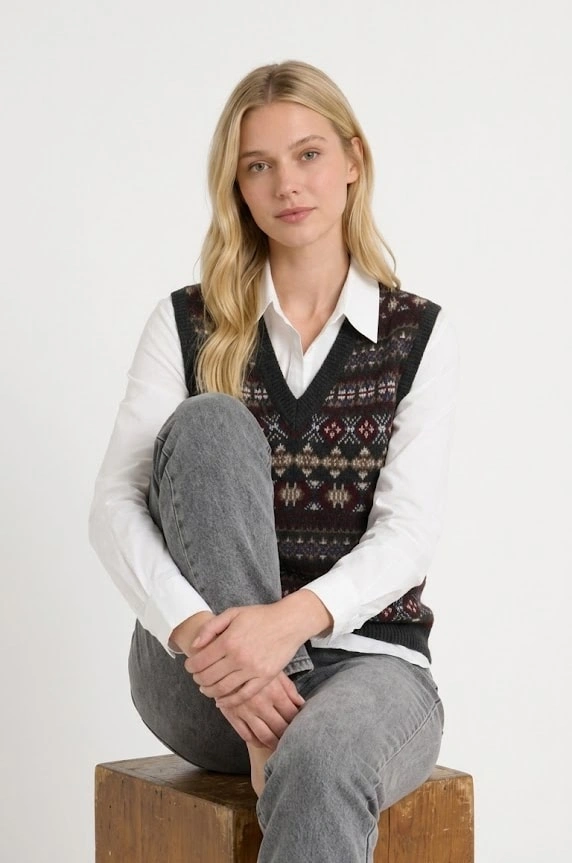
The cardigan sweater represents perfect both/and garment—structured enough for professional settings, soft enough for comfort, versatile enough for multiple contexts. A quality cardigan in excellent fabric becomes armor you can remove when needed, layer that provides both physical warmth and psychological confidence. It’s feminine without being frivolous, powerful without being masculine-coded, accessible without being casual.
Consider investing in signature cardigan representing your both/and identity. Perhaps it’s burgundy sweater in sumptuous cashmere—rich color suggesting power, luxurious fabric honoring comfort. Maybe it’s classic neutral in impeccable construction, signaling you value quality and understand timelessness. Whatever you choose, let it represent your refusal to choose between strength and softness. Wear it knowing you contain both.
Color Psychology and Feminine Power
Color carries meaning, and women’s relationship with color is political. Pink, for instance, has complex history—assigned to girls as “soft” color, reclaimed by movements as symbol of feminine power, worn by women refusing to abandon femininity while claiming authority. Your pink sweater choice is never just aesthetic; it’s statement about how you relate to femininity and power.

Similarly, wearing bold red sweater signals confidence and power—red is color of visibility, passion, refusal to diminish. Choosing soft neutrals—cream, grey, beige—isn’t weakness but sophistication, understanding that power doesn’t always announce itself loudly. The point isn’t which colors you choose but that you choose them consciously, understanding their cultural coding while making them mean what you want them to mean.
Texture as Tactile Resistance
In professional environments that demand discomfort—restrictive clothing, painful shoes, scratchy fabrics—choosing soft, comfortable knitted sweater options is quiet resistance. You’re asserting that your physical comfort matters even in spaces designed to make you uncomfortable. This isn’t frivolous concern; it’s boundary-setting. You can be professional, competent, authoritative while also being physically comfortable. The idea that competence requires discomfort is lie designed to keep women compliant and distracted.
Every time you choose merino wool sweater providing genuine comfort over synthetic alternative causing irritation, you’re voting for your wellbeing. Every time you select quality over performance of suffering, you’re rejecting idea that women must earn legitimacy through discomfort. These small daily choices accumulate into life lived on your terms rather than patriarchy’s.
Celebrating Contemporary Women Living Both/And
Voices of Strength and Softness
“I’m surgeon—I perform complex operations, make life-death decisions, lead teams in high-pressure situations. I’m also someone who loves soft things: cashmere sweaters, gentle textures, beautiful fabrics. For years, I thought these were contradictory—that loving softness somehow diminished my professional credibility. Then I realized: why? I can execute flawless surgery and appreciate beautiful textiles. I can make tough calls while wearing my softest sweater under my scrubs. My competence isn’t proven through rejecting comfort or beauty—it’s proven through my work. Now I deliberately embrace both. My grey cashmere cardigan for weekends off doesn’t make me less capable surgeon. My collection of soft, beautiful pieces doesn’t negate my strength. I’m both/and, and I’m done pretending otherwise.” — Dr. Sarah M., Boston, MA
“I run tech startup in male-dominated industry. Early on, I tried to out-masculine the men—severe clothing, no ‘soft’ colors, rejecting anything coded feminine. I thought that’s what success required. Then I noticed: I was miserable, felt inauthentic, and wasn’t even more respected for performance. So I stopped. I started wearing what I actually loved—including soft sweaters, feminine colors, comfortable pieces. My pink merino cardigan became my signature at pitch meetings. Investors commented on it, remembered me. My both/and style became differentiator, not liability. I proved you can raise millions while wearing beautiful soft clothing. I built successful company without sacrificing my aesthetic preferences. Strength and softness aren’t contradictory—they’re who I actually am.” — Jennifer K., San Francisco, CA
Practical Both/And Wardrobe Building
The Foundation: Pieces Working Multiple Ways
Build wardrobe around items serving both strength and softness needs. A quality turtleneck sweater in fine cashmere works for professional video calls (strength) while providing comfort during long work-from-home days (softness). A well-constructed cardigan sweater layers over formal pieces for meetings (strength) but also provides cozy coverage for casual weekends (softness). These versatile pieces honor your full life rather than fragmenting it into separate performances.

Quality as Feminist Choice
Investing in quality knitwear is feminist act on multiple levels. First, it supports textile industries employing women worldwide. Second, it rejects fast fashion’s exploitative labor practices disproportionately harming women. Third, it prioritizes longevity over disposability, honoring both environmental and personal wellbeing. Fourth, it asserts you deserve quality, comfort, and beauty—all messages patriarchy discourages in women.
When you choose cashmere sweater in excellent construction over cheap synthetic alternative, you’re making political statement: my comfort matters, my time matters (quality lasts longer), environmental impact matters, workers’ rights matter. These aren’t frivolous concerns; they’re values-aligned choices honoring interconnected wellbeing.
Your Signature Both/And Piece
Consider identifying or acquiring one piece representing your both/and identity—item you wear when you need to feel fully yourself, powerful and soft simultaneously. Perhaps it’s grey sweater in luxurious fabric you’ve worn to important meetings and difficult conversations. Maybe it’s bold burgundy sweater making you feel visible and confident. Whatever it is, let it remind you: you don’t have to choose. You can be everything you are—strong and soft, fierce and gentle, powerful and tender—all at once.
Women’s History Month: Honoring the Full Story
As we celebrate Women’s History Month, we honor not just the “firsts” and the famous but the ordinary women who lived both/and lives daily. The mothers who were also activists. The professionals who were also caregivers. The warriors who were also nurturers. The strong women who remained soft. The soft women who were incredibly strong.
We honor the women who knitted for war efforts while raising families. The seamstresses who created beauty while surviving difficulty. The textile workers who organized unions while maintaining households. The designers who revolutionized fashion while navigating sexism. The women who wore what they loved regardless of others’ judgments. The women who refused to diminish any part of themselves to satisfy limited expectations.
Your clothing choices participate in this legacy. Every time you wear soft knitted sweater to demanding environment, you honor women who refused to harden. Every time you choose quality over performance of suffering, you honor women who insisted their comfort mattered. Every time you embrace both strength and softness, you honor the full humanity women have always claimed despite constant pressure to fragment ourselves.

Explore our Women’s History Month collection featuring pieces celebrating both strength and softness: cashmere sweater women wear to claim space, quality wool sweater options honoring comfort alongside capability, and designs refusing false binaries. With prices from $39 to $169 and free shipping on orders over $69, building both/and wardrobe becomes accessible act of self-honoring.
Questions about selecting pieces representing your full self, building wardrobe honoring both strength and softness, or understanding quality worth investing in? Contact us today—we believe women deserve clothing celebrating their complete humanity, not limited versions patriarchy prefers.
Learn more about our commitment to empowering women through quality, honoring the full spectrum of feminine strength, and designs celebrating both/and living on our About page. Join the community choosing Sweater Wardrobe for pieces that refuse false binaries—where strength and softness coexist beautifully, and every woman is honored in her fullness.