Standing in a store confronting two seemingly identical sweaters—one priced at $30, the other at $150—most shoppers struggle to justify the price difference. Both claim “100% cotton,” both feel soft initially, both look similar on the hanger. Yet one will pill after three washes, lose shape within a season, and ultimately cost more per wear than its expensive counterpart. Understanding what makes a high-quality sweater requires looking beyond labels and price tags to examine fiber grades, construction techniques, finishing details, and manufacturing standards that separate investment pieces from disposable fashion.
At Sweater Wardrobe, quality isn’t marketing rhetoric—it’s our foundation. Every piece in our collection meets rigorous standards for materials, construction, and longevity because we believe sweaters should last years, not seasons. This comprehensive guide demystifies quality assessment, teaching you to recognize superior craftsmanship so every sweater purchase becomes informed investment rather than expensive mistake.
Fiber Quality: The Foundation of Everything
A sweater’s quality journey begins with its raw materials. No amount of skillful construction compensates for poor fiber quality—it’s like building house on weak foundation. Understanding fiber grades, sources, and characteristics helps you assess quality before even touching the garment.
Natural Fibers vs. Synthetics: High-quality sweaters prioritize natural fibers—wool, cashmere, cotton, alpaca, silk—over synthetics. Natural fibers breathe, regulate temperature, resist odors, and age gracefully. Synthetic fibers (acrylic, polyester, nylon) may resist wrinkles and cost less but they pill more readily, trap odors, create static, and degrade faster. Quality sweaters contain at least 70% natural fiber; premium pieces use 100% natural content.
Fiber Length Matters: Within any fiber category, longer fibers produce superior yarn. Long-staple cotton (fibers 1.125+ inches) creates smoother, stronger, more durable fabric than short-staple cotton. In wool, longer fibers mean less pilling and better hand-feel. Cashmere fiber length directly correlates with quality—34-36mm for Grade A versus under 28mm for Grade C. Ask about fiber length when purchasing premium pieces; transparency indicates confidence in quality.
Fiber Fineness: Finer fibers feel softer and create more luxurious fabric. Measured in microns (millionths of a meter), fiber diameter determines softness—cashmere averages 14-19 microns, merino wool 17-24 microns, regular wool 25-40+ microns. Our 100% Cashmere Short-Sleeve Sweater uses Grade A cashmere at 14-15.5 microns, delivering exceptional softness that lasts.
Fiber Source and Processing: Where and how fiber is sourced impacts quality. Mongolian cashmere from goats in extreme climates produces finer, longer fibers than Chinese lowland cashmere. Australian merino wool undergoes stricter quality controls than generic wool. Organic cotton avoids pesticide damage weakening fibers. Ethical sourcing often correlates with quality—producers investing in animal welfare and worker conditions typically invest in superior processing too.

Yarn Construction: Ply, Twist, and Consistency
Quality fiber means nothing if poorly spun into yarn. Yarn construction determines durability, appearance, and performance far beyond fiber content alone.
Ply Count: Ply refers to how many individual strands are twisted together creating final yarn. Single-ply (1-ply) uses one strand—lightweight and delicate but prone to pilling and holes. Two-ply twists two strands together, balancing weight with durability—most quality sweaters use 2-ply construction. Three-ply and four-ply create heavier, more robust yarn suitable for chunky knits or extreme cold. Higher ply doesn’t automatically mean better quality; it indicates intended weight and use. Quality lies in appropriate ply for garment type and consistent execution.
Yarn Twist: How tightly strands are twisted affects texture, durability, and pilling tendency. Tightly twisted yarn creates smooth, durable fabric resistant to pilling but can feel slightly firm. Loosely twisted yarn feels lofter and softer but pills more easily. Quality sweaters use appropriate twist for fiber and style—cashmere benefits from lighter twist preserving softness; cotton needs tighter twist for durability. Consistent twist throughout creates even texture; inconsistent twist produces irregular, lower-quality fabric.
Yarn Consistency: Hold sweater up to light and examine closely. Quality yarn maintains consistent diameter throughout—no thick spots, thin areas, or slubs (lumps). While artisan sweaters may intentionally include texture variation, commercial quality pieces should show evenness. Inconsistent yarn indicates poor spinning quality control and predicts uneven wear, pilling, and premature failure.
Anti-Pilling Treatment: Quality manufacturers often apply anti-pilling treatments during yarn production. These processes secure short fibers preventing them from working loose and forming pills. Look for “anti-pilling” mentions in product descriptions or ask retailers directly. Our Gray Fair Isle Cotton Sweater includes anti-pilling treatment ensuring pattern clarity remains sharp through years of wear.
Knitting Technique: Gauge, Tension, and Pattern Integrity
How yarn is knitted into fabric dramatically impacts quality, durability, and appearance. Superior knitting requires skilled craftsmanship and quality control.
Gauge Consistency: Gauge refers to knitting density—stitches and rows per inch. Quality sweaters maintain consistent gauge throughout, creating even fabric weight and drape. Examine sweater closely: do stitches appear uniform in size? Are there loose or tight sections? Inconsistent gauge creates weak spots prone to stretching or holes and indicates poor manufacturing quality control.
Knitting Tension: Proper tension creates fabric that’s neither too tight (stiff, restrictive) nor too loose (floppy, prone to snagging). Quality sweaters use appropriate tension for fiber and style. Fine gauge knits require tighter tension; chunky knits can be looser. Test by gently stretching fabric—it should give slightly then return to shape. Fabric remaining stretched or showing permanent distortion signals poor tension control.
Pattern Execution: For patterned sweaters (Fair Isle, cable knit, jacquard), examine pattern precision. Do cables align properly? Are color changes clean or muddled? Does pattern maintain integrity at seams? Quality manufacturers ensure patterns align across seam lines and remain consistent throughout garment. Our cable knit pieces show precise pattern execution where cables continue seamlessly despite construction seams.
Knitting Method: Fully-fashioned knitting (where pieces are knitted to shape) generally produces higher quality than cut-and-sew methods (where fabric is knitted then cut to pattern). Fully-fashioned prevents yarn ends fraying and creates cleaner lines. However, quality cut-and-sew still exists if properly finished. Ask about construction method when purchasing premium pieces.
Seam Construction: Where Good Sweaters Hold Together
Seams represent potential failure points. Quality construction ensures seams enhance durability rather than compromise it.
Seam Type: Superior sweaters use linking or looping seams where stitches from two pieces are joined stitch-to-stitch creating nearly invisible seam. This method maintains fabric integrity and elasticity. Lower-quality pieces use overlocked or serged seams—faster and cheaper but creating bulky, visible seams prone to unraveling. Turn sweater inside out: quality seams lie flat, show no raw edges, and match garment’s stretch.
Seam Reinforcement: High-stress areas (shoulders, armholes, neckline) require reinforcement. Quality sweaters include stay-stitching or tape along shoulder seams preventing stretching from garment weight. Armhole seams should be reinforced to withstand arm movement without distortion. Examine these areas carefully—reinforcement indicates thoughtful construction anticipating real-world wear.
Seam Finishing: Quality seams show no loose threads, unraveling ends, or puckering. All yarn ends should be properly secured and trimmed. Seam allowances should be consistent width throughout. These details require time and attention—shortcuts here signal overall construction compromises.
Pattern Matching at Seams: For striped, patterned, or textured sweaters, quality construction ensures patterns align across seams. Stripes should continue unbroken from front to back; Fair Isle patterns should flow naturally; cable knits should maintain rhythm. Pattern breaks at seams indicate rushed construction or pattern layout compromises.
Ribbing: The Often-Overlooked Quality Indicator
Ribbing at cuffs, hem, and neckline seems minor but reveals construction priorities. Quality ribbing maintains shape and provides proper finish.
Ribbing Structure: Quality ribbing uses tighter gauge than body fabric creating structure that holds its shape. It should feel substantial rather than flimsy. Test by gently stretching cuff—it should expand then snap back to original size. Ribbing remaining stretched or showing minimal recovery indicates poor elasticity predicting quick deterioration.
Ribbing Attachment: Examine where ribbing attaches to body fabric. Quality construction uses matching or complementary attachment method maintaining fabric integrity. Poorly attached ribbing shows gaps, pulls, or visible joining stitches. The transition should feel smooth without abrupt thickness changes.
Ribbing Width and Proportion: Ribbing should be proportionate to garment—neither too narrow (providing insufficient structure) nor too wide (overwhelming design). Quality designers choose ribbing width enhancing overall aesthetic while serving functional purposes.
Neck Ribbing Stability: Neckline ribbing faces particular stress. Quality sweaters reinforce neck ribbing preventing stretching from repeated on-off wear. The neckline should maintain shape even after many wears—sagging, stretched necklines signal construction weaknesses.
Finishing Details: Where Quality Reveals Itself
The difference between good and exceptional sweaters often lies in finishing—the final steps transforming knitted fabric into refined garment.
Edge Finishing: All edges (hem, cuffs, neckline, buttonholes) should be cleanly finished with no raw yarn visible. Quality sweaters use bound edges, reinforced stitching, or clean turning preventing fraying. Examine hem closely—loose threads or visible cut edges indicate rushed finishing.
Button Quality and Placement: For cardigans, button quality signals overall garment quality. Superior pieces use natural materials (shell, horn, wood, quality plastic) rather than cheap plastic. Buttons should attach securely with reinforcement button underneath (on inside). Button spacing should be even, buttonholes cleanly finished without fraying, and buttons properly aligned when fastened.
Zipper Quality: If sweater includes zipper, it should operate smoothly without catching fabric. Quality zippers use metal or high-grade plastic teeth, reinforced tape, and substantial pull tab. The zipper should be properly set into fabric without puckering or gaps. Test zipper several times—smooth operation indicates quality hardware and installation.
Labels and Tags: While not affecting performance, quality labels indicate manufacturing standards. Professionally printed labels with comprehensive information (fiber content, care instructions, country of origin, size) suggest legitimate manufacturing. Hand-written or unclear labels raise authenticity concerns.
Overall Cleanliness: Quality sweaters arrive clean and ready to wear—no excess fiber, loose threads, or manufacturing debris. While these cosmetic issues seem minor, their presence indicates quality control gaps likely extending to construction.
Fit and Drape: How Quality Manifests Physically
Quality sweaters fit and drape properly because superior materials and construction allow fabric to behave correctly.
Fabric Drape: Hold sweater by shoulders and observe how fabric hangs. Quality knits drape smoothly without twisted seams, fabric bunching, or irregular hanging. The fabric should flow naturally, conforming to gravity appropriately for its weight. Stiff, board-like fabric indicates excessive sizing or poor fiber quality. Excessively limp fabric suggests weak yarn construction.
Shape Retention: Try sweater on, then remove it and observe how quickly it returns to original shape. Quality pieces recover shape relatively quickly—fabric smooths, sleeves straighten, body returns to proper form. Sweaters remaining distorted after wearing signal weak fiber recovery or poor construction predicting permanent stretching.
Shoulder Alignment: Properly constructed sweaters have shoulders that sit where shoulders actually are—not drooping down arms or pulling uncomfortably high. This requires proper pattern making and construction. Misaligned shoulders indicate pattern or construction flaws.
Sleeve Set: Quality sweaters have sleeves that hang naturally from shoulder without twisting, pulling, or gaping. The armhole should fit comfortably without restriction or excess fabric. Examine how sleeve meets body—clean joining without puckering indicates skilled construction.

Color Quality: Dye and Color Fastness
Color quality separates sweaters that maintain appearance from those fading or bleeding within weeks.
Dye Penetration: Quality dyeing penetrates fiber completely creating color that won’t fade to surface gray. Test by examining inside seam allowances or hidden areas—color should match exterior. Surface-only dyeing fades quickly with washing or sun exposure.
Color Consistency: Examine sweater in good lighting. Color should be consistent throughout with no streaking, blotching, or variation between panels. Inconsistent dyeing indicates poor quality control and predicts uneven fading.
Colorfastness: While you can’t test this in-store, research brand reputation for colorfastness. Quality manufacturers use dye-setting processes ensuring minimal color transfer or fading. Check reviews mentioning bleeding, fading, or color changes after washing—these indicate dye quality issues.
Natural Fiber Color: For cashmere, the natural fiber color (white, gray, brown) influences final dye quality. Natural white cashmere accepts dye most evenly creating truest colors. Darker natural fibers dyed light colors may show underlying tones affecting color purity.
Weight and Hand-Feel: The Touch Test
How sweater feels in hand reveals much about quality—but knowing what to feel for matters.
Appropriate Weight: Quality sweaters feel appropriately weighted for their type and season. Lightweight doesn’t automatically mean low quality, nor does heavy mean high quality. Fine-gauge cashmere should feel surprisingly light for its warmth. Chunky cable knit should feel substantial. Evaluate whether weight matches intended use—winter sweater that feels flimsy fails basic quality requirements.
Softness vs. Scratchiness: Run sweater against sensitive skin (inner wrist, cheek). Quality wool sweaters may have slight texture but shouldn’t feel scratchy or irritating. Scratchiness indicates coarse fibers, poor processing, or synthetic content. Cashmere and merino should feel cloud-soft immediately; if they don’t, quality is questionable.
Surface Smoothness: Examine fabric surface. Quality knits show smooth, even surface without pills, snags, or fuzzy appearance when new. Slight nap is normal for some fibers (cashmere, mohair) but shouldn’t resemble heavy pilling. New sweaters already showing surface disruption will only worsen.
Fabric Recovery: Gently squeeze handful of fabric, release, and observe recovery. Quality fabric springs back relatively quickly showing good elastic recovery. Fabric remaining compressed or recovering very slowly indicates weak fiber or yarn construction predicting permanent distortion with wear.
Price as Quality Indicator: Understanding the Economics
While price doesn’t guarantee quality, understanding cost structures helps assess value and spot suspiciously cheap pieces.
Raw Material Costs: Grade A cashmere fiber costs approximately $80-100 per kilogram wholesale. A sweater requiring 300-400 grams means raw material alone costs $24-40 before spinning, knitting, labor, or markup. Therefore, $50 “cashmere” sweaters warrant skepticism—the economics don’t support genuine quality cashmere at that price.
Manufacturing Location: Manufacturing costs vary dramatically by country, affecting final prices. Italian and Scottish manufacturing costs more than Chinese or Indian but often delivers superior quality control. However, high-quality manufacturing exists globally—origin alone doesn’t determine quality. Use manufacturing location as one factor among many.
Brand Markup: Designer labels often charge 200-400% premium over production costs for brand cachet. This doesn’t make the sweater higher quality than well-made alternatives at half the price. Conversely, suspiciously cheap prices (under production cost estimates) signal corners cut somewhere—usually fiber quality or construction.
Direct-to-Consumer Advantage: Brands selling directly to consumers (like Sweater Wardrobe) eliminate retailer markup, offering quality comparable to pieces costing 50-100% more at department stores. Our collection demonstrates how direct sales allow premium quality at accessible pricing.
Care Requirements: Quality’s Double-Edged Sword
High-quality sweaters often require more careful care than cheap alternatives—not because they’re fragile, but because proper care preserves their superior qualities.
Care Label Honesty: Quality manufacturers provide accurate, comprehensive care instructions. Vague “hand wash” or “dry clean only” without specifics may hide construction weaknesses. Detailed care instructions (water temperature, drying method, storage tips) indicate confidence in product quality and commitment to customer satisfaction.
Washing Durability: Quality sweaters maintain appearance through proper washing. Colors shouldn’t bleed, fabric shouldn’t pill excessively, shape should remain stable. If reviews consistently mention deterioration after first wash, quality is suspect regardless of fiber content claims.
Storage Resilience: Quality pieces withstand proper storage without damage. Sweaters developing holes, permanent creases, or odors during normal storage indicate fiber or construction weaknesses. Proper storage (clean, folded, in breathable container with cedar or lavender) should preserve quality sweaters across seasons and years.
Red Flags: Signs of Poor Quality
Certain characteristics reliably indicate low quality regardless of other factors:
Immediate Pilling: If sweater shows pilling in store or after single wear, fiber quality is poor. All knits pill eventually, but quality pieces resist initial pilling for weeks or months, not hours.
Chemical Smell: Strong chemical odors indicate recent, potentially harsh processing or low-quality dyes. Quality sweaters may have slight natural fiber smell but never chemical reek.
Inconsistent Knitting: Visible loose stitches, holes, or irregular texture when new predict rapid deterioration. Quality control failures in visible aspects suggest hidden construction problems.
Vague Labeling: Labels saying “cashmere blend” without percentages, “cotton rich” without specifying content, or omitting care instructions signal attempts to obscure fiber quality or construction shortcuts.
Stretching in Store: If sweater already shows stretched neckline, sagging hem, or distorted sleeves on retail rack, construction quality is insufficient for normal wear.
Too-Good-to-Be-True Pricing: “Cashmere” for $40, “merino wool” for $25, “luxury knitwear” for $30—these prices don’t support quality claims. Someone—you—will pay the real cost through disappointment and replacement.
Quality Varies by Sweater Type
Different sweater types have specific quality considerations:
Cashmere: Focus on fiber grade (14-15.5 microns for premium), ply (2-ply for best balance), origin (Mongolian preferred), and surface smoothness. Premium cashmere shouldn’t pill immediately and should feel exceptionally soft.
Merino Wool: Check fineness (18-21 microns for quality), look for “superfine” or “extra fine” designations, ensure non-itchy feel, and verify good elastic recovery. Quality merino regulates temperature without scratchiness.
Cotton: Seek long-staple cotton (Pima, Egyptian, Supima), verify substantial weight (lightweight cotton sweaters lack longevity), check for mercerization (creates luster and strength), and assess anti-pilling treatment effectiveness.
Cable Knit/Chunky Knits: Examine cable definition and alignment, verify consistent stitch tension (crucial for dimensional patterns), check that cables don’t separate or distort, and ensure appropriate fiber choice (wool or cotton, not acrylic).
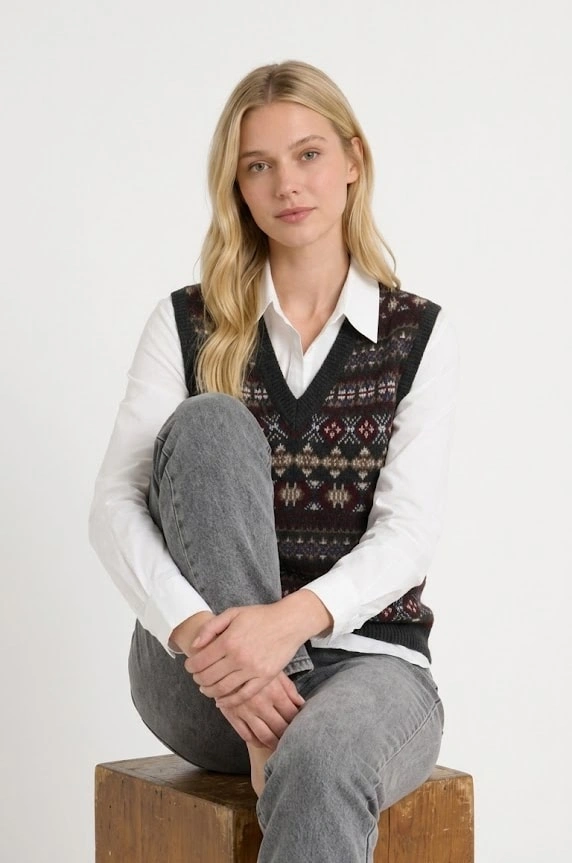
Fair Isle/Patterned: Verify color changes are clean (no color bleeding in pattern), ensure pattern continues correctly across seams, check that carrying yarn doesn’t create puckering, and assess overall pattern crispness.
Building Quality Literacy: Practice and Research
Developing eye and hand for quality requires practice and intentional learning:
Touch Everything: Visit stores handling various quality levels. Touch $30 acrylic sweaters, $100 cotton pieces, $200 cashmere, $500 designer knits. Feel differences in softness, weight, drape, recovery. Your hands will learn quality recognition faster than any written description teaches.
Compare Systematically: When shopping, hold two supposedly similar sweaters side-by-side. Compare weights, drape, surface smoothness, seam quality, ribbing substance. Direct comparison reveals quality differences invisible when examining pieces separately.
Read Fiber Content Obsessively: Make habit of reading every garment’s fiber content tag. Notice correlations between fiber content and performance. Learn which blends work (cashmere-silk, merino-cotton) and which serve cost-cutting (cashmere-acrylic).
Study Your Failures: When you own sweater that disappoints—pills immediately, loses shape, fades—examine it closely. What quality signals did you miss? What should you have noticed? Each poor purchase becomes education for future success.
Research Brand Reputations: Before major purchases, research brand quality reputation. Read detailed reviews (beyond star ratings—read actual text). Join online communities discussing knitwear quality. Learning from others’ experiences accelerates your quality education.
Conclusion: Quality is Investment, Not Expense
Understanding what makes high-quality sweater transforms shopping from gambling into informed investment. Quality sweaters cost more initially but deliver superior value through longevity, performance, and satisfaction. That $150 sweater wearing beautifully for seven years costs $21 annually; the $40 replacement requiring annual replacement costs $40 yearly. Quality wins economically while providing better experience throughout ownership.
The quality characteristics outlined here—fiber grade, construction technique, finishing detail, fit precision—aren’t luxury add-ons but fundamental requirements for sweaters serving their purpose properly. When you know what quality looks like, you can spot it regardless of brand name or price tag, making informed choices that serve your wardrobe and budget well.
Explore our quality sweater collection where every piece meets the standards detailed in this guide. We believe in transparency—sharing what makes our sweaters high-quality because educated consumers make better purchase decisions. For questions about specific quality aspects or help assessing quality in pieces you’re considering, visit our contact page. We help you develop quality literacy ensuring every sweater purchase meets your standards.
Quality isn’t luxury—it’s baseline expectation. When you know what to look for, what to demand, and what red flags to avoid, you’ll never waste money on disappointing sweaters again. That’s not just smarter shopping—it’s smarter living.