A well-made sweater is not a seasonal purchase. It is a decade-long relationship — one that rewards attention, repays patience, and gets better, softer, and more characterful with every year of careful wearing. The difference between a sweater that looks tired after two winters and one that becomes a wardrobe cornerstone for the next ten isn’t always the quality of the fiber. Often, it’s simply how well it’s been looked after. At Sweater Wardrobe, we design our pieces to last — from our anti-pilling 100% cotton Fair Isle knits to our pure cashmere short-sleeve tops — and we want you to have everything you need to protect that investment. This is the complete guide to sweater care: washing, drying, de-pilling, and storing, organized by fiber type, with the practical depth that most guides skip right over. Read about our philosophy of making things that are built to last.

The Golden Rules of Sweater Care — Before Anything Else
Before you sort by fiber or fill a basin, there are four principles that apply to every sweater in every situation. These are the habits that separate a knitwear collection that ages gracefully from one that deteriorates prematurely.
Wash less, air more. The single most damaging thing you can do to a knit sweater is wash it too often. Most sweaters — including cashmere, wool-blend, and cotton knits — do not need to be laundered after every wear. A sweater worn over a base layer, in a clean environment, can typically be aired out between wears and washed after three to five uses. Overwashing stretches fibers, dulls colors, and accelerates pilling. After wearing, lay your sweater flat on a clean surface for several hours before folding and storing. Let it breathe.
Never hang a sweater. Gravity is a knit sweater’s quiet enemy. Hanging a sweater — even on a padded hanger — creates shoulder distortion, stretches the body, and deforms the neckline over time. Every sweater in your collection should be stored folded. Every time, without exception.
Read the label — then read it again. Care labels exist for good reason. The fiber composition of your sweater determines everything: water temperature, detergent type, drying method. A wool-blend has different needs than a 100% cotton knit, which has different needs than pure cashmere. What works perfectly for one will damage the other. Before washing anything for the first time, check the label and commit to what it says.
Treat spots immediately, gently. The worst thing you can do with a fresh stain is rub it. Rubbing drives the stain deeper into the fiber structure and can cause permanent damage. Instead, blot gently with a clean damp cloth from the outside in, working toward the center of the stain. For most spills on natural fiber knits, cool water and a tiny amount of mild detergent applied with a soft cloth will handle it before it sets.
How to Wash Your Sweater by Fiber Type
This is where sweater care gets specific — and where most well-intentioned people make their biggest mistakes. Here is exactly how to wash each fiber type in our collection.
Cashmere: Handle Like the Luxury It Is
Pure cashmere — like our 100% Cashmere Short-Sleeve Sweater in gray — is one of the most rewarding fibers to own, and one of the most unforgiving if mistreated. Heat and agitation are its two greatest enemies: heat causes irreversible shrinkage, agitation causes felting (a process where the fine fibers mat together into a dense, stiff fabric you cannot reverse). The good news is that cashmere is naturally odor-resistant and does not need frequent washing — which means with a sensible care routine, you may only need to hand wash it five or six times per season.
When wash day arrives: fill a clean basin with cool or lukewarm water — never warm, never hot. Add a small amount of specialist cashmere or wool wash, or a very gentle pH-neutral baby shampoo. Turn your sweater inside out, submerge it gently, and press it softly against itself for a minute or two. Do not twist, scrub, or wring. Drain the basin, refill with cool clean water, and gently press the sweater to rinse. Repeat until the water runs clear. To remove excess water, lay the sweater flat on a clean dry towel, roll the towel up with the sweater inside, and press — never squeeze or twist. Then unroll, reshape the sweater to its original dimensions on a fresh dry towel, and leave it flat to air dry away from direct sunlight and heat sources. View our 100% Cashmere Short-Sleeve Sweater — with proper care, it will only get softer over time.
Cotton Knits: More Forgiving, Still Deserving of Respect
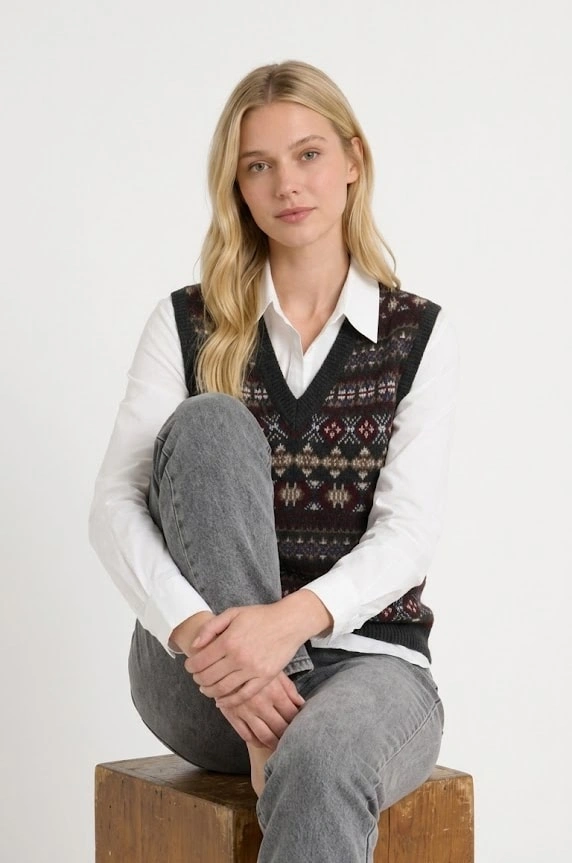
Our 100% cotton knits — including the anti-pilling Gray Fair Isle Cotton Sweater — are engineered for durability and resilience. The anti-pilling construction means the surface fiber is treated to resist the friction-caused balling that afflicts lesser cotton knits, and the tight Nordic-pattern structure holds its shape exceptionally well over time. That said, even the most robust cotton knit benefits from careful handling.
Cotton knits can generally tolerate a gentle machine wash cycle, but the key words are gentle and cold. Use the delicate or hand-wash cycle on your machine, set the water temperature to cold, and place the sweater in a mesh laundry bag to protect it from friction against other items. Use a mild liquid detergent — powder detergents can leave residue in the knit structure. Avoid fabric softener entirely: it coats cotton fibers and reduces the natural breathability that makes cotton knitwear such a pleasure to wear. Dry flat, always. Even a short spin in the dryer can cause enough heat and agitation to distort the shape of a beautifully constructed cotton knit.
Wool-Blend Knits: The Art of the Gentle Machine Wash
Our Wool-Blend Fitted Knit Two-Piece Set — combining wool with acrylic, nylon, and other stabilizing fibers — represents the pragmatic middle ground of knitwear care. The blended composition gives it more resilience than pure wool, while the wool content still means you should treat it with more care than you would a synthetic garment.
For wool-blend knits, a gentle machine wash on a cold or cool delicate cycle works well, provided you use a wool-safe or delicate liquid detergent and a mesh laundry bag. Avoid any setting that involves high spin speeds — the centrifugal force of a high spin can stretch and distort the knit structure. If you’re ever uncertain, hand washing in cool water is always the safe choice. As with all natural fiber blends, flat drying is essential. The cardigan in this set in particular benefits from being reshaped while damp — gently smooth the front bands, collar, and cuffs back to their original position before laying flat to dry.
Cable Knit Sweaters: Structure That Rewards Careful Handling
The sculptural cable texture of our Chocolate Brown Cable Knit Sweater is its defining feature — and that three-dimensional stitch structure requires a little extra care to preserve over years of wear. The raised cable panels can flatten under excessive pressure or heat, losing the beautiful definition that makes this type of knitwear so visually striking.
Hand wash your cable knit in cool water with a gentle detergent, taking care never to scrub or work the fabric against itself in a way that could flatten the cable relief. When drying, always lay it face-down on a clean towel: the pressure of lying face-up compresses the cable texture against the surface, while lying face-down lets gravity work in your favor, allowing the cables to retain their dimension as they dry naturally. Explore the Chocolate Brown Cable Knit Sweater and keep its rich texture looking new for years to come.
The De-Pilling Guide: Restoring Your Sweater to Its Best
Pilling — those small, fuzzy balls that form on the surface of a knit sweater — is one of the most common sources of frustration in sweater ownership. The reassuring news is that pilling is almost always fixable, and understanding why it happens makes it much easier to prevent.
Pills form when short or loose fiber ends work their way to the surface of the knit through friction — the repeated movement of a bag strap against your side, the rubbing of your arms against your body, or the friction of a seat belt. They are not necessarily a sign of poor quality: even the finest cashmere pills in its first few wears as loose surface fibers are shed. High-quality pieces like our anti-pilling Gray Fair Isle Cotton Sweater are specifically engineered to minimize this process, but no natural fiber is entirely immune.
To remove existing pills, a fabric shaver (also called a lint shaver or defuzzer) is your most effective tool. Lay your sweater flat on a firm surface, hold the fabric taut with one hand, and pass the shaver gently across the affected area. Do not press hard — let the blade do the work. Move in small, controlled sections rather than sweeping broadly. A good fabric shaver removes pills cleanly without damaging the underlying fiber structure, and a freshly de-pilled sweater can look genuinely new again. To prevent future pilling, wash your sweaters inside out, store them folded away from other garments that might cause friction, and consider wearing a close-fitting base layer underneath knits that tend to pill in high-friction areas.

Seasonal Storage: How to Put Your Sweaters Away Right
The off-season is when many sweaters sustain their worst damage — not from wear, but from improper storage. A few simple steps taken before you fold your knits away for spring or summer will make a significant difference to how they emerge in the fall.
Always wash before storing. Storing a sweater with body oils, perfume residue, or invisible food particles on the fiber is an invitation to moths and permanent staining. Even if a sweater looks clean, wash or hand-rinse it before long-term storage. Perspiration in particular oxidizes over time and can cause yellowing or fiber weakening that only becomes visible when you unfold the sweater six months later.
Store in breathable containers. Airtight plastic bins might seem protective, but they trap moisture and create the humid conditions that encourage mildew and fiber degradation. Cotton storage bags, pillowcases, or acid-free tissue-lined boxes are all better choices. They allow the fiber to breathe while protecting it from dust, light, and pests.
Cedar, not mothballs. Cedar blocks or cedar-lined drawers are the classic natural deterrent for moths — effective, pleasant-smelling, and harmless to fiber. Mothballs, by contrast, contain chemicals that can transfer to your sweaters and cause their own kind of damage. Cedar works best when kept fresh: lightly sand the surface of cedar blocks once or twice a season to reactivate the natural oils that do the work.
Fold, never roll or compress. Folded sweaters hold their shape better than rolled ones, and loose folds are better than tight ones. Never stack so many sweaters that the bottom ones are under significant compression — this can distort the fibers in ways that flat drying won’t fully correct.
What Our Customers Say About Longevity
“I’ve had my Fair Isle cotton sweater for three winters now and it genuinely looks the same as the day it arrived. I wash it on a cold gentle cycle, dry it flat, and it has not pilled once. Anti-pilling actually means anti-pilling.” — Karen S., Minneapolis, MN
“The cashmere short-sleeve sweater keeps getting softer. I was nervous about caring for it at first — I’d ruined a cashmere piece in the dryer years ago — but hand washing in cool water with baby shampoo works perfectly. I do it every five or six wears and it comes out looking impeccable.” — Julie M., Portland, OR
“I cannot stress enough: do not hang your sweaters. I learned this the hard way. Since I started folding everything and storing it properly, my Sweater Wardrobe pieces look like new even after two years of regular wear.” — Christine L., Chicago, IL
Invest Once. Wear for a Decade.
The sweaters worth caring for are the ones worth buying in the first place — and at Sweater Wardrobe, every piece in our collection is designed with longevity at its core. From the anti-pilling 100% cotton construction of our Fair Isle knits to the energy-efficient, water-saving production methods behind every garment, we build our pieces to reward the care you give them. Our collection ranges from $39 to $89, with free domestic shipping on every order over $69. Pieces that, with the right care, will still be in your wardrobe when the decade turns.
Have a specific care question about one of our pieces? Reach out to our team — we know our materials inside and out, and we are always glad to help.