Open your closet and count your sweaters. Fifteen? Twenty-five? Forty? Now ask yourself: how many do you actually wear? For most people, the answer reveals a uncomfortable truth—we own far more sweaters than we need, regularly reaching for the same 3-5 favorites while others gather dust. Understanding how many sweaters you really need depends less on arbitrary numbers and more on your lifestyle, climate, washing habits, and wardrobe philosophy. The goal isn’t deprivation—it’s optimization.
At Sweater Wardrobe, we believe in thoughtful curation over mindless accumulation. Whether you’re building a minimalist capsule wardrobe or seeking practical balance between variety and excess, determining your ideal sweater count starts with honest assessment of how you actually live. Let’s explore the numbers, reasoning, and strategies that help you build a sweater collection that serves your life rather than cluttering it.
The Minimalist Answer: 5-7 Sweaters
True minimalists operate on the principle that every item must earn its place through frequent use and versatility. For sweater collections, this translates to 5-7 strategic pieces carefully selected to cover all scenarios without redundancy. This isn’t arbitrary restriction—it’s intentional curation that eliminates decision fatigue while ensuring you actually love and wear everything you own.
The Core Five:
1. Neutral Crewneck or V-Neck (gray, camel, or cream) – Your daily workhorse for casual wear, layering under blazers, pairing with jeans or trousers. Our 100% Cashmere Short-Sleeve ($69) in gray serves this role beautifully—classic enough for any context, luxurious enough to feel special every wear.
2. Classic Cardigan (black or navy) – Instant polish for professional settings, temperature control for variable climates, layering piece that transforms t-shirt-and-jeans into intentional outfit. Choose quality construction that maintains shape through frequent wear.
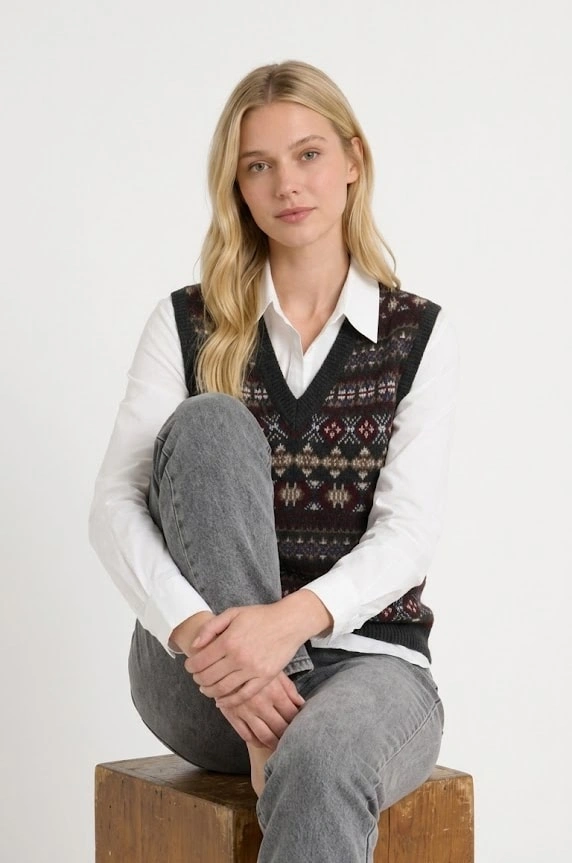
3. Textured Statement Piece (cable knit, Fair Isle, or chunky weave) – Adds visual interest to basic bottoms without requiring pattern mixing skills. The Chocolate Brown Cable Knit ($69) provides texture complexity while remaining neutral enough for maximum versatility.
4. Lightweight Layering Piece (turtleneck or fitted base layer) – Extends wardrobe into transitional seasons, layers under dresses and vests, works alone during milder weather. The Short-Sleeve Turtleneck ($49) exemplifies this category—substantial enough to stand alone, fitted enough to layer seamlessly.
5. One “Special Occasion” Piece – Slightly dressier option for events requiring elevated casual or smart-casual dress code. This could be finer gauge cashmere, unique color, or sophisticated pattern that feels intentional without being costume-y.
Optional Additions (6-7):
6. Second Neutral Option – If you wear sweaters daily, having backup in same category while one is being washed prevents outfit repetition fatigue. Choose different neutral (if you have gray, add camel or cream).
7. Seasonal Specialty – Heavy winter sweater for genuinely cold climates, or lightweight summer knit for air-conditioned spaces. Only add if your climate truly demands it—don’t buy winter weight if you live in Florida or summer knits in Minnesota.
This 5-7 piece collection creates approximately 30-40 outfit combinations when paired with basic bottoms (jeans, trousers, skirts). The mathematics work: 5 sweaters × 6 bottom options = 30 combinations, and that’s before considering layering variations. For minimalists, this sufficiency without excess perfectly balances wardrobe functionality with simplified decision-making.

The Practical Answer: 10-15 Sweaters
Most people aren’t minimalists and don’t aspire to be. The practical sweet spot—offering variety without overwhelming excess—lands around 10-15 quality sweaters. This range accommodates different contexts (professional, casual, athletic), seasonal variations, and personal style expression while remaining manageable and wearable.
The Practical Ten:
Professional Wear (3-4 pieces):
- Classic cardigan in neutral (black, navy, gray)
- Fitted pullover in professional color (camel, burgundy, forest green)
- Twinset or coordinated pieces for polished presentation
- Optional: Second cardigan if you wear them to office daily
Casual Wear (4-5 pieces):
- Comfortable crewneck or v-neck for weekends
- Oversized cozy piece for maximum comfort
- Patterned or textured sweater (Fair Isle, cable knit, stripes)
- Casual cardigan for layering
- Athletic or sporty option if active lifestyle
Seasonal/Special (2-3 pieces):
- Heavy winter sweater for cold weather
- Lightweight option for summer air conditioning or spring/fall
- Dressier piece for events and occasions
Personal Expression (1-2 pieces):
- Bold color or unique pattern that makes you happy
- Sentimental piece (gift, travel souvenir, meaningful purchase)
This 10-15 range prevents wearing identical outfit weekly while avoiding closet overflow. According to wardrobe research, people who maintain 10-15 sweaters wear each piece approximately 15-20 times per year—sufficient rotation to prevent boredom without pieces languishing unworn. Compare this to those owning 30+ sweaters, where pieces average only 3-5 wears annually before being forgotten or donated.
The practical collection also accommodates life’s realities: laundry schedules (having enough pieces to last between wash cycles), weight fluctuations (keeping favorite pieces in slightly different sizes), and outfit variety for social settings where appearing in “the same sweater again” feels awkward even though no one actually remembers what you wore last week.
The Maximalist Answer: 20+ Sweaters
Some people genuinely use and enjoy extensive sweater collections. If you work from home in cold climate, attend varied social events, or simply derive genuine joy from fashion variety, 20-30+ sweaters isn’t excess—it’s appropriate for your lifestyle. The key differentiator between thoughtful collection and hoarding: you actually wear them.
When Maximalist Makes Sense:
Climate Demands: Living in regions with 6+ months of genuine sweater weather justifies larger collection. If you wear sweaters October through April, rotating through 25 pieces means each gets worn approximately 8-10 times annually—reasonable usage rate.
Professional Requirements: Careers demanding varied, polished appearance daily (teaching, client-facing roles, creative industries) benefit from extensive wardrobe. Wearing different sweater each workday for three weeks prevents “outfit repeating” concerns while maintaining professional presentation.
Genuine Interest: Fashion enthusiasts who actively engage with clothing—following trends, experimenting with styling, photographing outfits—use extensive collections as creative tools rather than passive accumulation. If sweaters bring you joy beyond mere function, larger collection serves legitimate purpose.
Practical Storage: Owning 30 sweaters in spacious walk-in closet differs from cramming 30 into tiny apartment. Physical space constraints should influence collection size—if adding sweaters requires complex organization systems or storing off-season pieces under bed, you’ve exceeded your space’s capacity.
The Maximalist Reality Check:
Even maximalist wardrobes benefit from curation. Apply the “one-year rule”: if you haven’t worn a sweater in twelve months, honestly assess whether you ever will. Sentimental pieces deserve exemption, but the random impulse buy languishing unworn should be donated to make room for pieces you’ll actually use. Quality maximalism beats quantity hoarding—better to own 25 pieces you adore than 50 you tolerate.
Climate-Based Calculations
Your geographic location dramatically impacts sweater needs. Someone in Los Angeles requires different collection than someone in Minneapolis, and pretending otherwise leads to either inadequate warmth or wasted closet space.
Mild Climates (Year-Round Temperatures 50-75°F):
Sweater season spans maybe 3-4 months with only occasional truly cold days. Here, 5-8 sweaters suffice: few lightweight pieces for air-conditioned spaces, couple medium-weight options for cool evenings, maybe one heavier piece for rare cold snaps. Focus on versatility and layering capability rather than heavy insulation. Our cashmere short-sleeve works perfectly in mild climates—provides warmth without bulk, layers easily, transitions across seasons.
Moderate Climates (Distinct Seasons, Varied Temperatures):
Four-season regions with hot summers, cold winters, and genuine spring/fall transitions need 10-15 sweaters spanning weight spectrum. Include lightweight pieces for September and May, medium-weight for October/November and March/April, heavy options for December-February. This variety ensures appropriate sweater for current temperature without suffering or sweating.
Cold Climates (Extended Winter, Short Summers):
Regions where sweater weather extends 7-9 months justify 15-20+ pieces. When you’re wearing sweaters September through May, rotation prevents wearing identical outfits weekly. Include range from lightweight layering pieces through heavy standalone sweaters, with emphasis on heavier weights seeing most use. Quality matters more in cold climates—cheap sweaters that don’t actually provide warmth waste money regardless of quantity.
Extreme Climates (Consistently Hot or Cold):
Year-round heat (tropical regions, southern states): 3-5 lightweight sweaters maximum, primarily for over-air-conditioned indoor spaces. Year-round cold (arctic regions, high altitude): 20+ sweaters spanning weights, with emphasis on quality insulation and layering capability. Match your collection to actual wearing opportunity—don’t buy sweaters you’ll never wear just because they’re pretty.
Lifestyle Factors That Influence Numbers
Beyond climate, how you actually live determines ideal sweater count more than any prescriptive formula.
Work Environment:
Office workers wearing sweaters 5 days weekly need more pieces than remote workers or those in casual industries. If sweaters constitute your professional uniform, 8-12 work-appropriate pieces prevent repetitive appearance. Conversely, if you wear sweaters only weekends, 4-6 casual pieces suffice. Match quantity to actual usage frequency.
Laundry Habits:
Washing weekly? You need fewer sweaters since they cycle through rotation quickly. Washing every 2-3 weeks? Larger collection prevents wearing same pieces repeatedly between washes. Calculate: how many sweater-wearing days between laundry cycles? Own at least that many pieces, plus few extras for variety and simultaneous cleaning.
Social Obligations:
Frequent social events (dinners, gatherings, cultural activities) create “outfit fatigue” if you own too few pieces—the sense everyone has seen you in “that sweater” repeatedly. Active social calendar justifies 10-15 pieces providing sufficient variety. Homebodies or those with limited social obligations need fewer pieces since repetition doesn’t matter.
Personal Style Evolution:
If your aesthetic shifts frequently (trending from minimalist to boho to preppy), smaller collection allows easier evolution—replacing 7 pieces costs less and creates less waste than replacing 25. Style consistency over years justifies larger collection since pieces remain relevant indefinitely. Our timeless collection focuses on pieces that transcend trends, supporting long-term wardrobe building.

The One-In-One-Out Rule
Once you’ve established your ideal number, maintaining it requires discipline. The one-in-one-out rule prevents collection creep: before adding new sweater, remove existing piece. This forces critical evaluation—is the new purchase truly better than anything you currently own? Does it fill actual gap or merely add redundancy?
Implementing the Rule:
When purchasing new sweater, immediately identify piece to donate, sell, or discard. If you can’t find anything to remove, question whether you actually need the addition. The difficulty finding piece to eliminate suggests your current collection already serves all needs—new purchase likely redundant.
Exemptions:
The rule allows exemptions for legitimate wardrobe expansion: climate change (moving from Florida to Vermont justifies adding heavy sweaters without removing lightweight ones), lifestyle change (new office job requiring professional pieces), size change requiring replacement. These represent genuine collection evolution rather than mindless accumulation.
The Replacement Cycle:
Quality sweaters last years, even decades with proper care. Plan for natural replacement cycle: as beloved piece wears out, pills excessively, or finally succumbs to moth damage, replace with similar item rather than expanding collection. This maintains steady-state wardrobe preventing both excess accumulation and gaps from attrition.
Quality vs. Quantity: The Critical Trade-Off
Seven quality sweaters provide better wardrobe value than twenty cheap ones. This isn’t snobbery—it’s mathematics and material reality. Quality pieces last longer, look better, feel better, and ultimately cost less per wear than disposable alternatives.
The Cost-Per-Wear Calculation:
$69 quality sweater worn 50 times over 5 years: $1.38 per wear
$25 cheap sweater worn 15 times over 1 year: $1.67 per wear
The “expensive” sweater delivers better value despite higher initial cost. Multiply across entire wardrobe: 7 quality pieces at $70 average ($490 total) serving 5+ years versus 20 cheap pieces at $30 average ($600 total) requiring replacement every 1-2 years. Quality wins economically while occupying less closet space and requiring fewer shopping trips.
Quality Indicators Worth Paying For:
Natural fiber content (cotton, wool, cashmere), reinforced seams, proper finishing, anti-pilling treatment, and classic construction justify higher prices through longevity and performance. These features aren’t luxury add-ons—they’re essential differentiators between sweaters lasting season versus decade. Visit our About page to learn our quality commitments.
When Quantity Trumps Quality:
Rarely, but legitimate scenarios exist: children’s sweaters (outgrown before wearing out), extremely limited budget (survival trumps optimization), or pieces for messy activities (painting, gardening) where damage risk high. In these cases, acceptable quality at lowest price makes sense. For adult wardrobe staples, however, quality should win every decision.
Building Your Ideal Collection: Step-by-Step
Starting from scratch or rebuilding overstuffed closet requires strategic approach. Here’s how to build ideal sweater collection intentionally:
Step 1: Assess Current Ownership
Remove all sweaters from closet. Try each on, examining fit, condition, and whether you’d purchase it again today. Create three piles: “love and wear regularly,” “like but rarely wear,” and “don’t like or damaged.” The middle pile reveals the hardest truths—why aren’t you wearing pieces you supposedly like? Usually it’s poor fit, uncomfortable fabric, or redundancy with better alternatives.
Step 2: Determine Your Number
Based on climate, lifestyle, and wardrobe philosophy, decide target number. Be honest about actual usage rather than aspirational wearing. If you realistically wear sweaters 3 days weekly, you don’t need 25 pieces. Calculate: days per week wearing sweaters × weeks between laundry = minimum pieces needed. Add 20-30% for variety.
Step 3: Identify Gaps
Review your “love” pile against ideal categories (professional, casual, seasonal, special occasion). What’s missing? Maybe you have five casual sweaters but nothing work-appropriate, or plenty of pullovers but no cardigans. Strategic additions fill actual gaps rather than randomly accumulating more of what you already own.
Step 4: Set a Budget
Building quality collection takes time and money. Rather than purchasing everything at once (often leading to compromised quality due to budget constraints), plan strategic acquisitions over 1-2 years. Budget for 2-3 quality pieces annually, ensuring each purchase represents genuine improvement over existing options.
Step 5: Commit to Maintenance
Smaller, higher-quality collection only delivers value through proper care. Invest in sweater shavers, proper storage, quality detergent. Learn correct washing and drying techniques. The difference between sweater lasting 2 years versus 10 years typically lies in care practices, not initial quality alone.
The Capsule Wardrobe Approach
Capsule wardrobes—limited collections where all pieces coordinate—offer another framework for determining sweater needs. Classic capsule contains 30-40 total items (all clothing categories), with sweaters typically comprising 6-8 pieces.
Capsule Sweater Selection:
Choose sweaters that coordinate with every bottom in your capsule. If your bottoms include black pants, dark jeans, gray trousers, and navy skirt, select sweaters working with all four: gray, camel, cream, white, navy all qualify. Avoid pieces requiring specific bottom pairing—that specialized burgundy sweater only working with your one pair of cream pants doesn’t belong in capsule built on versatility.
Seasonal Capsules:
Some people maintain separate capsules per season: winter capsule with heavy sweaters, summer capsule with lightweight knits, spring/fall transition capsule with medium weights. This approach works well for extreme climates where seasonal clothing differs dramatically. Store off-season pieces properly (clean, folded, moth-protected) and rotate fully as seasons change.
The 10-Item Capsule Challenge:
Extreme minimalists sometimes limit entire wardrobe to 10 items for specific period (30 days, one season). In such capsules, 2-3 sweaters represent significant portion of total pieces. This exercise reveals how little you actually need while forcing creative styling with limited options. Try it temporarily even if not pursuing permanent minimalism—the insights about your wearing patterns prove valuable.
Special Circumstances and Exceptions
Certain situations warrant different calculations than general guidelines suggest:
Pregnancy and Postpartum: Body changes during and after pregnancy make pre-pregnancy sweaters temporarily unwearable. Rather than buying extensive maternity sweater wardrobe, invest in 3-5 stretchy, oversized pieces serving pregnancy and nursing periods. Return to regular collection once body stabilizes.
Weight Fluctuation: If your weight varies significantly (10+ pounds), keep favorite sweaters in two sizes rather than replacing entire collection with each change. Store non-current-size pieces separately but accessibly. Quality pieces worth keeping through fluctuations rather than repeatedly replacing.
Career Transition: Switching from casual to professional environment (or vice versa) may temporarily inflate collection as you build new category while maintaining old for non-work wear. This transition phase justifies exceeding normal numbers, but reassess after 6-12 months, donating pieces no longer serving new lifestyle.
Sentimental Pieces: Sweaters with genuine emotional value (grandmother’s hand-knit, first date sweater, significant gift) deserve closet space even if rarely worn. However, limit sentimental exemptions to truly meaningful pieces—every sweater can’t claim special status without defeating the category’s purpose.
When You Have Too Many: The Decluttering Process
Realizing you own too many sweaters—evidenced by unworn pieces, overcrowded storage, or inability to see what you own—requires systematic reduction:
The Hanger Trick: Turn all sweater hangers backward. After wearing sweater, return it with hanger facing forward. After 3-6 months (full season), hangers still backward reveal unworn pieces. Unless there’s legitimate reason (wrong season, saving for special occasion), donate these pieces—if you didn’t wear them once during appropriate season, you won’t.
The Photo Test: Photograph yourself wearing questionable pieces. Often, sweater you thought looked fine reveals fit or style issues in photos. If you wouldn’t post the photo or wouldn’t want to be photographed in the sweater, why keep it?
The Honesty Questions: For each sweater: Do I feel confident wearing this? Does it fit correctly today, not twenty pounds ago? Would I buy this again? Does it work with my current lifestyle? Is it comfortable, or do I avoid wearing it for specific reason? Honest answers reveal which pieces deserve space.
The Donation Psychology: Many people struggle donating perfectly good items. Reframe: keeping unworn sweaters doesn’t serve anyone. Donating allows someone else to benefit while freeing your space for pieces you’ll actually wear. Quality pieces deserve active use, not closet languishing.
Conclusion: Your Perfect Number
So how many sweaters do you really need? The answer lives somewhere between your honest assessment of lifestyle, climate, and preferences, and your commitment to intentionality over accumulation. For most people, this lands between 7-15 quality pieces—enough for variety and appropriate options without overwhelming excess.
The perfect number isn’t universal prescription but personal discovery through evaluation of how you actually live. It’s the quantity allowing you to open your closet and see only pieces you love, all of which fit, work with your current life, and get worn regularly. It’s enough that you never struggle to find appropriate option, but not so many that choices become paralyzing or storage becomes challenging.
Start today: count your sweaters, assess your wearing patterns, identify your actual needs. Then build or refine your collection around that reality rather than abstract ideals. Whether your perfect number is 5 or 25, let it be thoughtfully chosen and honestly earned through genuine use rather than mindless acquisition.
Explore our curated sweater collection designed to support intentional wardrobe building. Every piece meets quality standards justifying closet space, with timeless styling ensuring relevance across years. For help determining which specific pieces serve your needs best, visit our contact page. We help you build sweater collection perfectly sized to your life—not too many, not too few, but exactly right.